50 Tools Every HVAC Technician Needs
Published on June 13, 2026
Nobody hands you a list on day one. You find out what you need when you're already on the job, standing there without the right tool, looking like you don't know what you're doing.
So here's the list. All 50 tools. What each one actually does and what to watch for when you buy.
Basic Hand Tools
These are the tools you use on every job. If you don't have these, you can't work.
1. Screwdriver Set

Get a full set — flathead and Phillips in multiple sizes. HVAC equipment has screws everywhere: access panels, terminal strips, blower housings, control boards. Don't buy the cheapest set you can find. The tips strip out fast, and then you're fighting a screw that won't move instead of doing the actual job.
2. Pliers
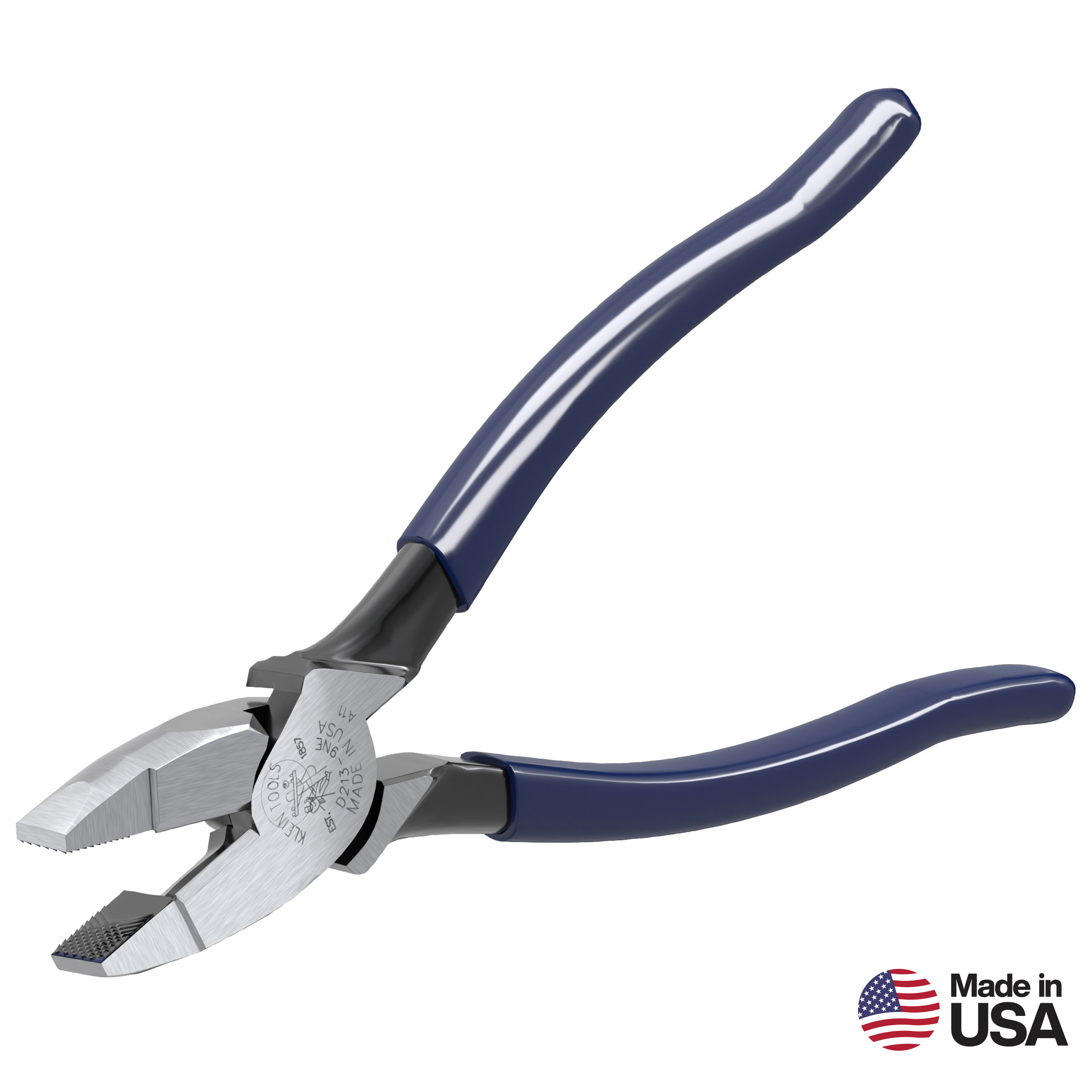
Two types matter most. Lineman's pliers for gripping, twisting, and cutting wire. Needle-nose for getting into tight spots around coils and terminals. You'll grab one or the other on almost every job.
3. Wrenches

Fixed combination wrenches plus one good adjustable. Fixed wrenches don't round off bolt heads the way adjustable ones can. Use your combination wrenches when you can. Save the adjustable for when you have to.
4. Hammer
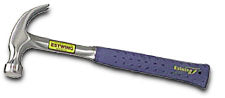
A standard 16 oz claw hammer. You're not framing houses, but you'll still use it — knocking duct into position, driving stakes for equipment pads, the usual "nothing else is working" moments.
5. Tape Measure

25-foot minimum. You're measuring duct runs, equipment clearances, rough openings, and line set distances constantly. The locking button on cheap tape measures breaks fast. Spend a little more on a decent one.
6. Utility Knife / Duct Knife

For cutting duct board, flex duct, insulation, and vapor barrier. Change your blades regularly. A dull blade means you push harder, the knife slips, and you cut yourself. Keep extra blades in the bag.
7. Scratch Awl
A pointed metal spike with a handle. Cheap and simple. You use it to pierce duct board, punch starting holes before driving sheet metal screws, and score lines before cutting. They're under $10. Get one.
8. Caulking Gun
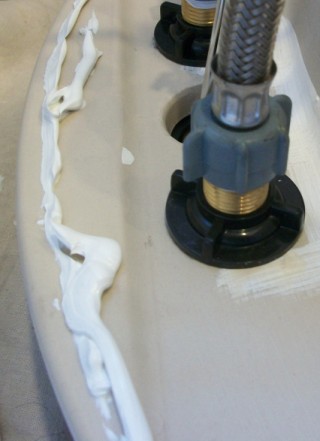
For sealing around penetrations where ductwork goes through floors and walls. Mastic sealant, fire caulk, silicone — they all go in the same gun. Get a smooth-rod model, not ratchet-style. Ratchet guns give you less control and waste product when you release the handle.
9. Staple Gun

For attaching vapor barrier, flexible duct straps, and insulation. You want a heavy-duty model — Arrow T50 or similar. The craft-store staple guns won't hold up on a job site. They'll jam on you at the worst time.
10. Tin Snips / Sheet Metal Shears
Three types: straight-cut (yellow handle), left-cut (red handle), right-cut (green handle). Get all three. You'll be cutting sheet metal, duct collars, and takeoffs constantly. The color coding is standard across every brand — memorize it.
11. Hand Seamer

Flat-jawed pliers for bending sheet metal edges by hand. You use this to fold flanges, close duct seams, and bend tabs into place. If you're doing any sheet metal work in the field, you need one.
12. Duct Crimper
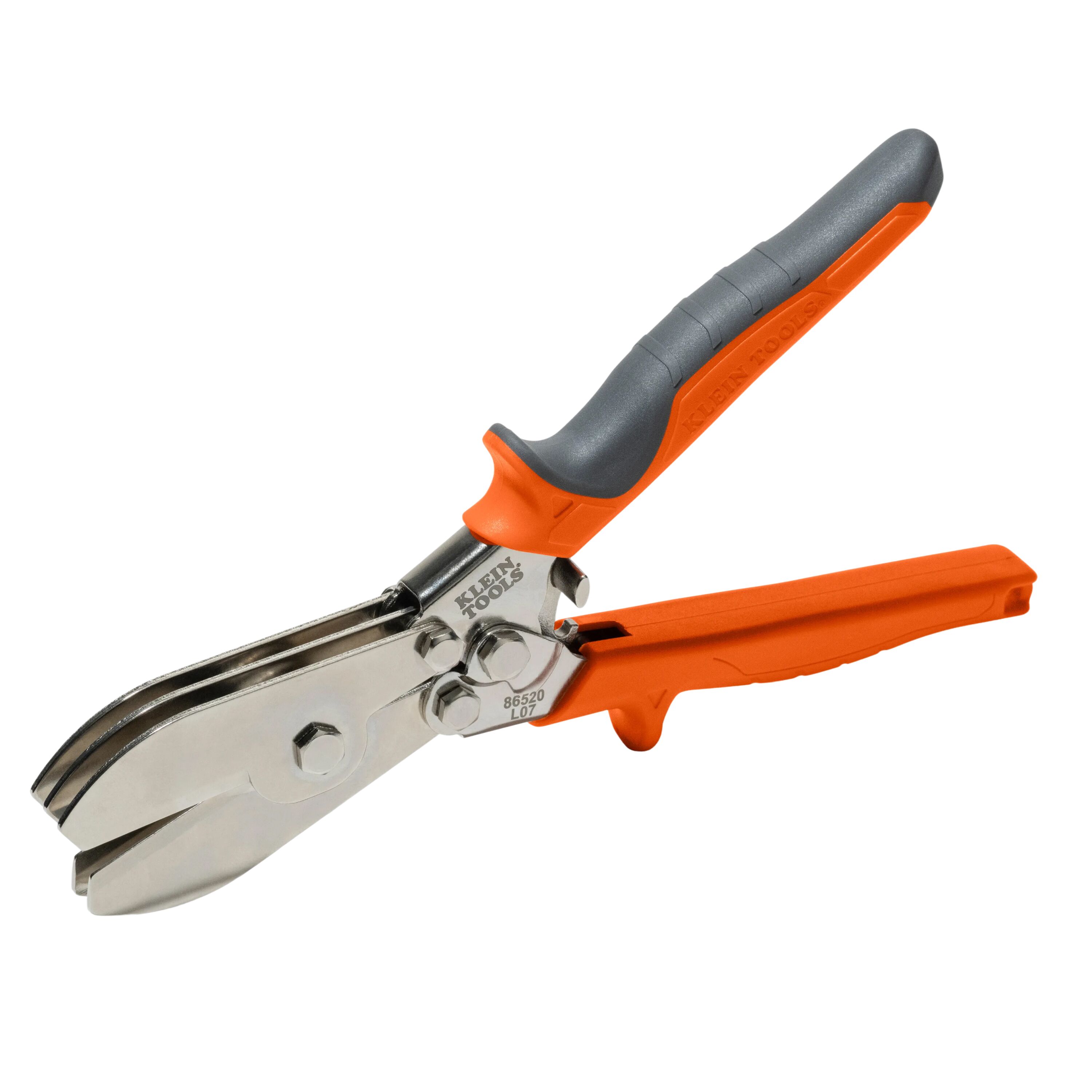
Crimps the end of round duct so it slides into a collar or fitting. Looks like heavy pliers with a star-pattern jaw that makes small folds around the duct edge. Without it, round duct won't connect to anything.
13. Tubing / Pipe Cutter

For cutting copper refrigerant lines clean. A clean cut matters — burrs left by a hacksaw shred O-rings and cause leaks. Get a standard-size cutter and a mini cutter for tight spaces. The cutting wheel wears out; keep replacement wheels in your bag.
14. Tubing Bender
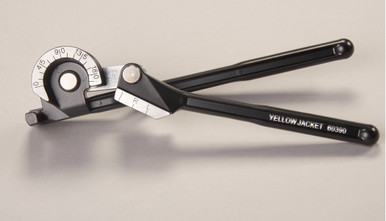
For bending copper line set without kinking it. A kink restricts refrigerant flow and causes system problems that are hard to diagnose. Spring benders handle gentle bends. Lever-style benders give you tighter, more precise bends in less space.
15. Allen (Hex) Wrench Set

Both SAE and metric. Set screws on blower wheels, access panel fasteners, and a dozen other places use hex drives. A ball-end set lets you work at an angle when you can't get straight in — worth having.
16. Level

Condensers need to be level — or slightly tilted toward the drain port. Air handlers need to be level. Get a torpedo level for tight spaces and a 2-foot level for equipment pads and large units. Don't eyeball it.
Power Tools
17. Cordless Drill

The most-used tool in your bag. Driving sheet metal screws, drilling holes for line sets and drain lines, mounting brackets. Get an 18V or 20V brushless motor model — brushless lasts longer and runs cooler. Buy two batteries. You'll burn through one mid-job constantly.
18. Reciprocating Saw

Your demo tool. Cutting through walls, subfloor, old ductwork, and pipe. Stock metal-cutting blades and wood-cutting blades. Using a wood blade on sheet metal wastes time and burns up blades.
19. Angle Grinder

For cutting stubborn sheet metal, grinding welds, and dealing with rusted bolts or fittings. You won't use this every day, but when nothing else works, this does.
20. Extension Cord

50-foot, 12-gauge, rated for 15 amps minimum. Undersized cords cause voltage drop that burns out tool motors. The thin cords are for lamps. A job site needs real cord.
21. Flashlight / Headlamp

You'll spend time in attics, crawl spaces, and mechanical rooms with no light. A headlamp keeps your hands free, which is what actually matters when you're in a tight space trying to connect something. Rechargeable beats battery-powered at this point — better runtime and you're not buying AA batteries constantly.
22. LED Work Light
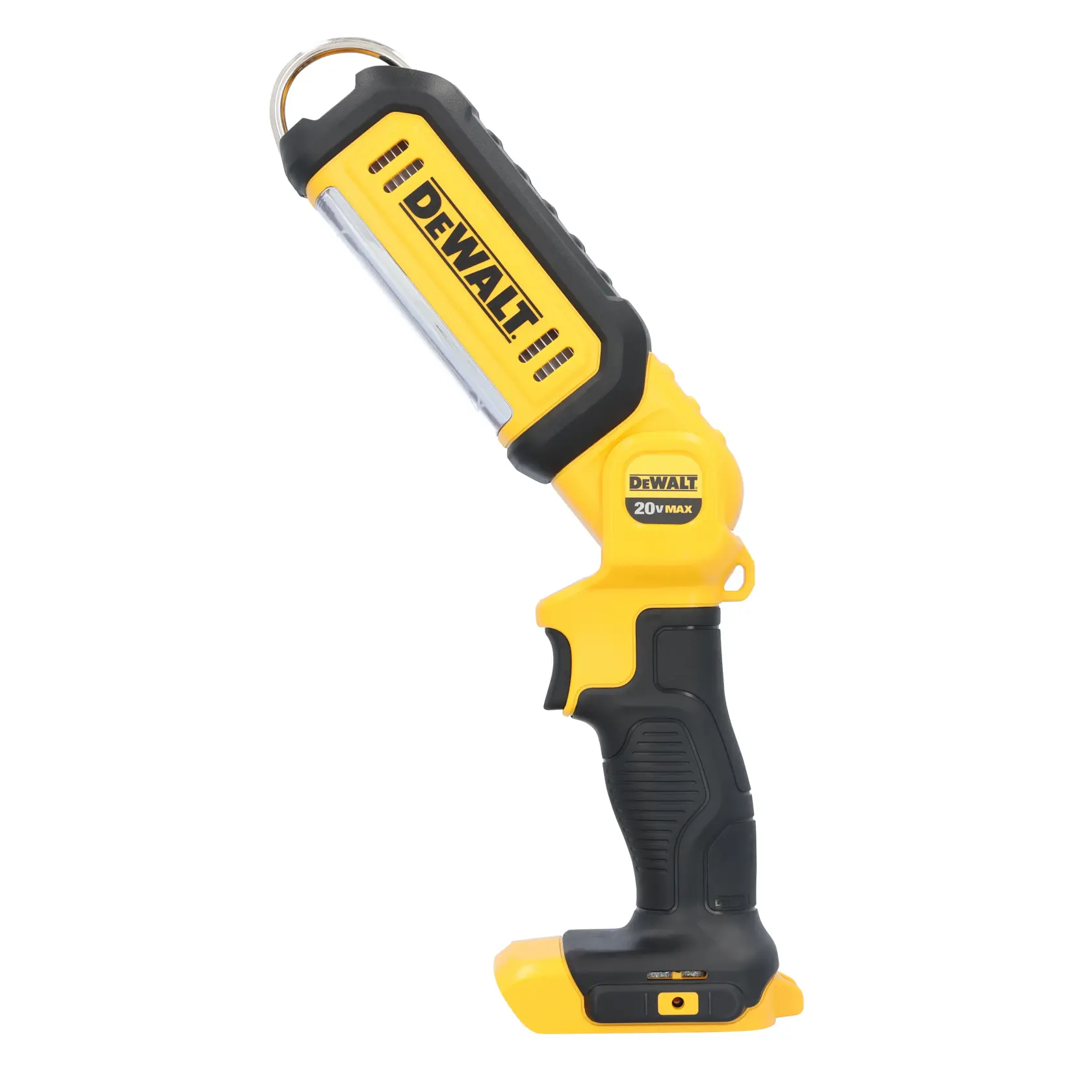
A standalone area light you can set on the floor or hang from a joist. A headlamp lights where you're looking. A work light floods the whole space. In a mechanical room or crawl space, you need both.
23. Wet/Dry Shop Vacuum
Clearing clogged condensate drain lines is a daily call in summer. This is how you do it. Also useful for cleaning drain pans, pulling standing water, and cleaning debris from air handler cabinets. A 5-gallon is enough for most service work.
24. Heat Gun

For shrinking heat-shrink tubing on wire splices, softening old insulation tape before removal, and warming copper lines in cold weather during a refrigerant charge. Not something you use every day, but you will need it.
Safety Gear
Skip this section and you'll regret it. This is not filler.
25. Safety Glasses

ANSI Z87-rated impact lenses. When you're drilling overhead or grinding metal, debris goes everywhere. Regular prescription glasses don't cut it — they're not impact-rated. Keep a pair in your bag at all times.
26. Work Gloves

Cut-resistant gloves for sheet metal work — those edges are genuinely sharp and the cuts happen fast. Leather gloves for general work. Nitrile disposables for refrigerant and chemical handling. You need all three.
27. Ear Protection

Foam plugs or earmuffs. Compressors, generators, and power tools cause cumulative hearing damage over years. This is the most skipped safety item in the trades. You don't notice the loss until it's done.
28. Dust Mask / Respirator

N95 at minimum for attic work with insulation and old duct materials. For refrigerant work and flush jobs, you want a half-face respirator with organic vapor cartridges. Insulation fibers accumulate. Don't breathe them.
29. Steel-Toe Work Boots

A dropped condenser compressor will destroy an unprotected foot. Composite-toe boots are lighter and don't get cold in winter the way steel does. Either way, get solid ankle support — you're on ladders and rooftops, and your footing needs to be stable.
30. Lockout/Tagout Kit

You lock out the power before working on electrical components. Your personal lock goes on the disconnect. Nobody else can restore power while your lock is on it. This is OSHA 1910.147. People have died because someone skipped this step. Do it every time, no exceptions.
31. Safety Harness / Fall Protection

Required by OSHA when you're within 6 feet of an unprotected roof edge. Full-body harness tied to a roof anchor. If your employer puts you on a rooftop without fall protection available, that's a real problem — not just a rule thing.
Electrical Diagnostic Tools
32. Non-Contact Voltage Tester

Carry this in your pocket. Before you touch any wire, you scan it. It beeps and lights up if voltage is present. It doesn't matter how sure you are the power is off — you check first. Every single time, no exceptions.
33. Multimeter

Checks voltage, resistance, continuity, and current. You'll use this to diagnose contactors, capacitors, motors, thermostats, and control boards. The one shown is an analog meter — still in use, but digital meters from Fluke or Klein are what most techs carry now. Learn to use both.
HVAC Specialty Tools
This is where HVAC splits from other trades. These are refrigerant and system-specific tools you won't find in a general contractor's bag.
34. Manifold Gauge Set
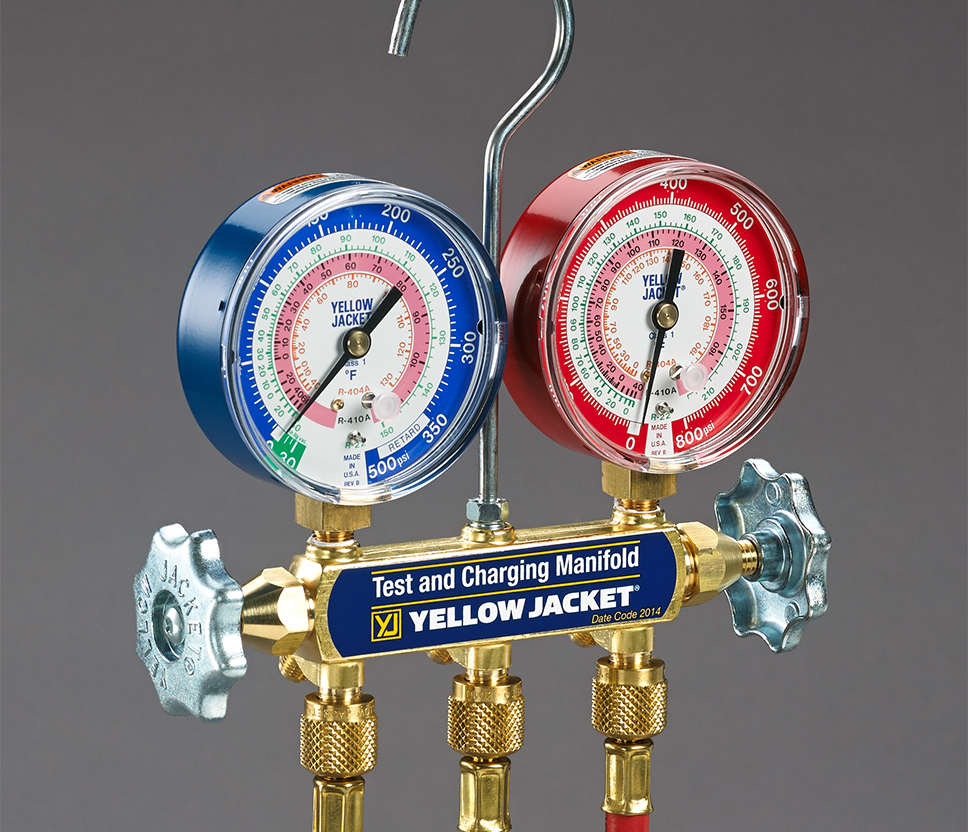
Two ports — high side and low side — plus a center utility port. Connects to the service valves on the refrigerant circuit and shows you system pressures. You use this to diagnose refrigerant problems and verify a proper charge. Make sure your set is rated for the refrigerant you're working with. R-410A systems run at much higher pressures than older R-22 equipment.
35. Digital Thermometer / Infrared Thermometer

For measuring supply and return air temperatures, checking subcooling and superheat on refrigerant lines, and reading surface temperatures. An IR thermometer reads from a distance without touching the surface. A probe thermometer reads air temperature. You want both, and you'll use both constantly.
36. Manometer

Measures gas pressure in inches of water column. Used for setting and verifying burner pressure on natural gas and propane furnaces. Wrong gas pressure means wrong combustion. This is the tool that tells you the actual number instead of a guess.
37. Vacuum Pump

Removes moisture and non-condensables from the refrigerant circuit before charging. If you rush the vacuum or skip it, moisture stays in the system, mixes with refrigerant oil, and turns acidic. That destroys the compressor over time. Pull a deep vacuum, hold it to confirm there are no leaks, then charge. Two-stage pumps pull deeper than single-stage and are worth the price difference.
38. Refrigerant Recovery Machine

Required by law. EPA Section 608 — you cannot vent refrigerant to the atmosphere. Before opening any refrigerant circuit, you recover the charge into a recovery cylinder using this machine. Yes, it's expensive. No, you can't work without it.
39. Nitrogen Regulator

Mounts on a tank of dry nitrogen. Used to pressure-test a line set for leaks before charging and to purge the line set while brazing copper fittings. Never pressure-test with refrigerant — it's hazardous and EPA prohibits it. Nitrogen is inert, cheap, and the right tool for leak testing.
40. Refrigerant Scale

A digital scale accurate to 0.1 oz for charging refrigerant by weight. Charging by weight is the most accurate method — you know exactly how much went in. Put the refrigerant cylinder on the scale, open it up, and watch the number drop. Some digital manifold gauge sets integrate weight tracking, which is convenient.
41. Refrigerant Leak Detector

An electronic sniffer that beeps when it detects refrigerant in the air. You wave the probe around fittings, coil connections, and service ports to find leaks. Get one with a replaceable sensor — sensors wear out after a few years of heavy use. Electronic detectors find leaks faster than UV dye for most field work.
42. Psychrometer / Hygrometer

Measures relative humidity and temperature. Psychrometers use wet-bulb and dry-bulb temperature readings together to calculate humidity. Digital hygrometers give you a direct readout. You need this for comfort complaints and to confirm that a system is actually dehumidifying — not just blowing cold air without pulling moisture out of it.
43. Thermal Imaging Camera
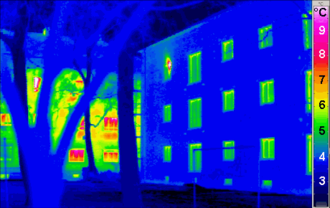
Converts temperature differences into color — hot shows as red, cold shows as blue. Useful for finding refrigerant leaks at coils, spotting overloaded electrical connections, locating duct leaks, and checking insulation. Not every tech carries one on day one. But any shop doing serious diagnostic work will have one. New techs can rent them for specific jobs.
44. Core Removal Tool (Schrader Valve)

The service ports on refrigerant systems have a Schrader valve core inside — same idea as a tire valve. This tool removes and replaces those cores without releasing the refrigerant charge. You'll use it when a core is leaking or when you need to swap one out while the system is pressurized.
45. Coil Fin Straightener / Fin Comb
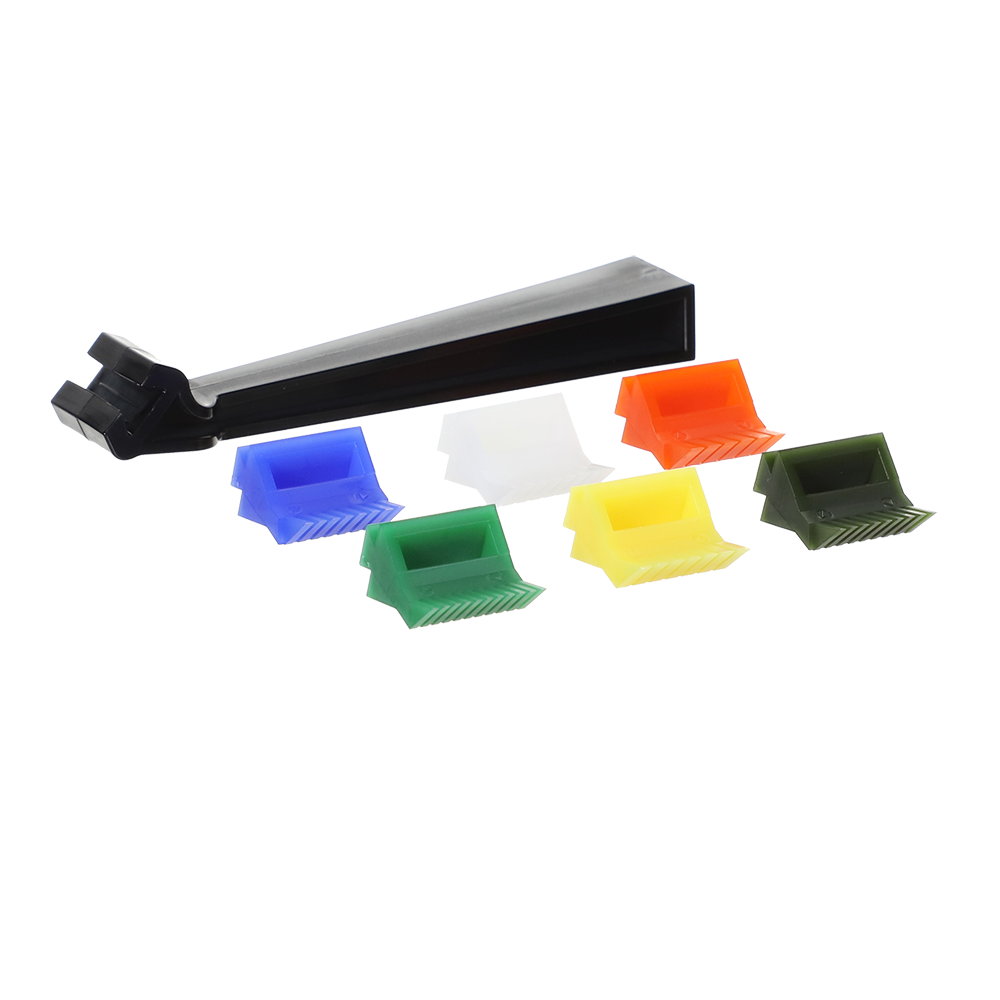
Condenser and evaporator coils have thin aluminum fins packed tightly together. When they get bent — from hail, debris, or careless handling — airflow drops and efficiency falls. A fin comb has rows of teeth at different spacings to straighten fins back out. Basic tool, low cost, genuinely useful on older and damaged equipment.
46. Flaring Tool
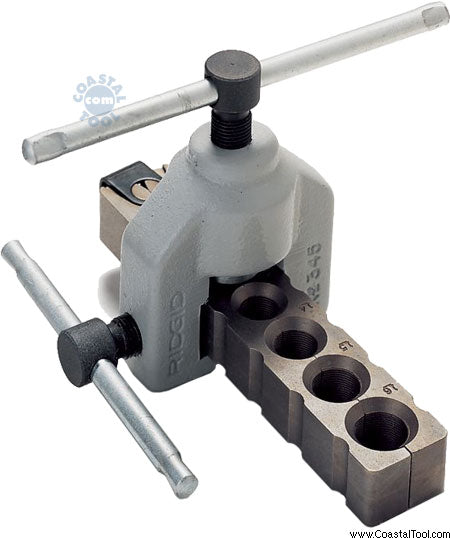
Creates a flared, bell-shaped end on copper tubing for use with compression fittings on gas lines and some refrigerant connections. A cheap flaring tool makes uneven flares that leak. A quality tool makes clean, consistent flares that seal properly. This is one where the cheap version costs you more in the long run.
47. Refrigerant Hoses
The hoses that connect your manifold gauge set to the system's service ports — high-side, low-side, and utility. Low-loss fittings on the ends minimize refrigerant release when you disconnect. These are pressure-rated specialty hoses. Not garden hoses. Not air compressor hoses.
48. Combustion Analyzer
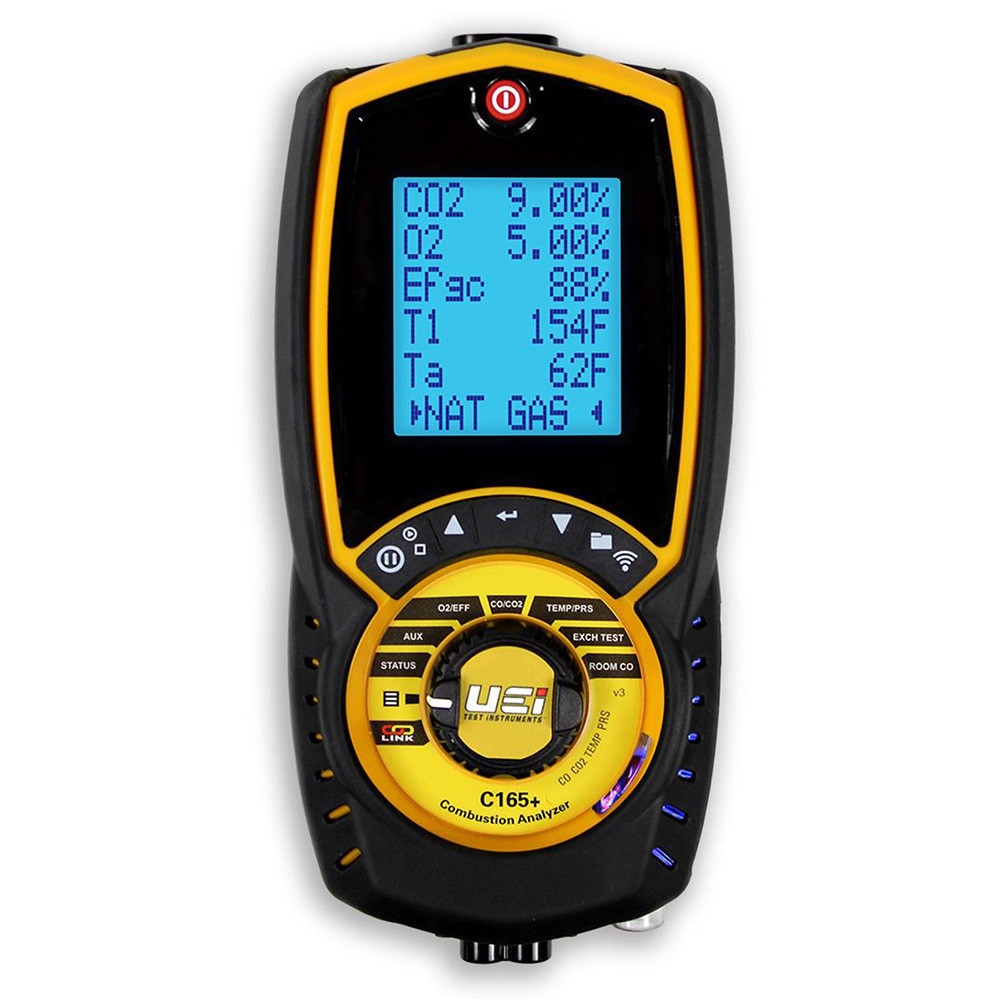
Measures what's coming out of the flue: CO, CO2, oxygen levels, and stack temperature. High carbon monoxide in flue gas means incomplete combustion — which can mean CO leaking into the living space. A combustion analyzer tells you what the heat exchanger is actually doing. Guessing on this one has consequences.
Chemicals & Software
49. Flushing Solvent
Used after a compressor burnout to clean contaminated refrigerant lines and coils. Burnouts leave acid and carbonized oil throughout the system. If you don't flush that out before installing a new compressor, the new one fails quickly too. Comes aerosol or liquid. Follow the manufacturer's flushing process — these are strong solvents.
50. HVAC Load Calculator
Software, not a hand tool — but it belongs on this list. Manual J load calculation determines the right equipment size based on square footage, insulation levels, window area, climate zone, and infiltration. Oversized equipment short-cycles, creates humidity problems, and wastes energy. Undersized equipment can't keep up on hot days. Most techs just match the old unit size. That's why a lot of systems are wrong-sized. Do the calculation.
A Straight Note on Images
Photos come from two sources: Wikimedia Commons (public domain and Creative Commons licensed) and direct product pages from manufacturers and specialty tool retailers — Klein Tools, Milwaukee Tool, Yellow Jacket, Fieldpiece, DeWalt, RIDGID, Appion, UEi, and others.
Image coverage: 45 out of 50 tools. The five without photos are the scratch awl, wet/dry shop vacuum, refrigerant hoses, flushing solvent, and the HVAC load calculator. The last two are intentional — one is a chemical and one is software. The tool descriptions are accurate regardless of whether a photo is present.